CBSE Class 10 Result 2026 Declared: 93.7% Pass Rate, How to Check
 Jun, 19 2026
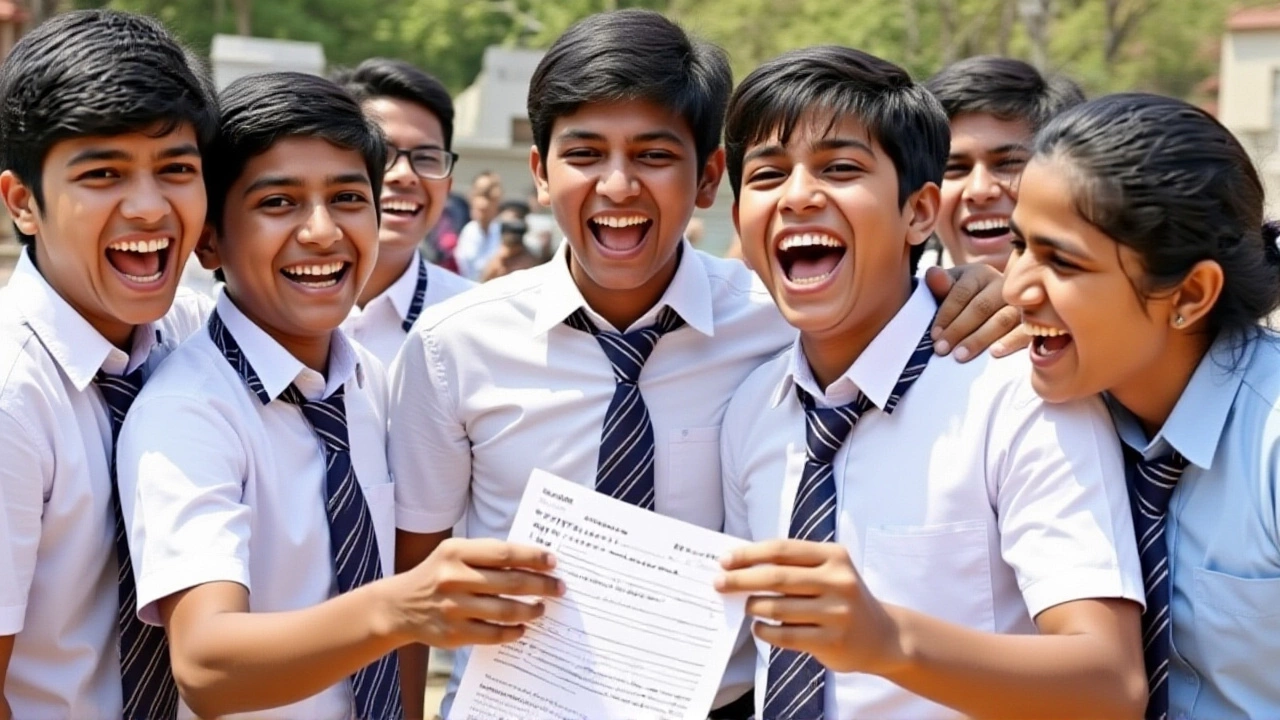
When Central Board of Secondary Education (CBSE) hit the publish button on the CBSE Class 10 Result 2026India, millions of students held their breath. The results went live at 4:00 PM on Wednesday, April 15, 2026, on the official portal cbseresults.nic.in. Here’s the headline number that matters most: a staggering 93.70% pass rate. That means nearly 94 out of every 100 students cleared the board exams. For parents and teenagers alike, it was a moment of relief mixed with the immediate scramble to download marksheets before servers potentially slowed down.
The announcement didn't just drop on one site. It rippled across multiple digital channels simultaneously. While the primary hub remained the CBSE website, the board also pushed data to DigiLocker and the UMANG app, ensuring that even if the main site lagged under traffic, students had backup options. This multi-channel approach has become standard for major Indian educational bodies, but the speed of this year's release was notably swift.
How to Check Your Results: A Step-by-Step Guide
If you missed the initial wave or are checking for a friend, here is exactly how to retrieve your scorecard. You don’t need to be a tech wizard; you just need your admit card handy.
Method 1: The Official Website
Visit results.cbse.nic.in or cbse.gov.in. Look for the link labeled "Class 10th Result 2026." You’ll need to enter specific credentials to unlock your data:
- Roll Number
- School Number
- Date of Birth
- Admit Card ID (sometimes required)
- Centre Number (for some portals)
Once you click "Submit," your subject-wise scores will appear. Pro tip: Take a screenshot immediately. Then, download the PDF marksheet. Don’t rely solely on the browser window; save a copy for future college applications.
Method 2: DigiLocker (The Reliable Backup)
If the main site is acting up—a common occurrence during peak hours—switch to DigiLocker. Log in using your Aadhaar-linked mobile number. Navigate to the "Education" section, select CBSE, and enter your roll number and date of birth. Your digital marksheet should load instantly. This method is often faster because DigiLocker’s infrastructure handles high traffic better than many government result portals.
Method 3: SMS and IVRS
Not everyone has reliable internet access. For those without smartphones or data plans, CBSE provided offline options. Send an SMS to 7738299899 with the format: CBSE10 [Space] Roll Number [Space] Date of Birth [Space] School Number [Space] Centre Number. Alternatively, call the IVRS line at 011-24300699 (or 24300699 from Delhi). Follow the voice prompts to hear your results read aloud. It’s old-school, but it works when the internet doesn’t.
Why the 93.70% Pass Rate Matters
A pass rate of 93.70% isn’t just a statistic; it reflects a broader trend in Indian secondary education. Over the past five years, CBSE has seen a steady climb in pass percentages, moving away from rote memorization toward competency-based assessments. This year’s figure suggests that the curriculum adjustments made post-2020 are paying off. Students aren’t just passing; they’re performing well across core subjects like Mathematics, Science, and Social Studies.
However, the real story isn’t just about passing. It’s about the distribution of grades. While the source material doesn’t break down the distinction rates, educators note that higher pass rates often correlate with a wider spread of top-tier grades. This puts pressure on colleges and schools to differentiate candidates based on merit rather than just eligibility.
Second Board Exam Results: What’s Next?
Here’s the twist. If you appeared for the CBSE Class 10 Second Board Exam 2026, your results are handled separately. Platforms like Shiksha.com and Careers360 highlight that these results are also available via the same portals (cbse.gov.in and cbseresults.nic.in). The process is identical: use your roll number, school code, DOB, and admit card ID.
The second board exam is typically for students who couldn’t appear for the main exam due to illness or other emergencies. Its inclusion in the same digital ecosystem ensures that no student is left behind due to technical glitches or administrative delays. The availability of these results through the UMANG app further democratizes access, allowing students in remote areas to check their status without needing a computer.
Expert Analysis: The Digital Shift
The seamless integration of DigiLocker and UMANG into the result-checking process marks a significant shift in how India manages educational data. In the past, students relied on physical copies sent by schools. Now, the digital marksheet is legally equivalent to the original. This reduces fraud, speeds up admissions processes, and gives students control over their academic records.
But there’s a catch. Not all students have Aadhaar-linked phones. While the majority do, rural areas still face connectivity issues. The IVRS and SMS options remain crucial lifelines for these communities. As long as digital divides exist, analog backups must remain robust.
What Should Students Do Now?
First, verify your details. Check for any discrepancies in your name, roll number, or marks. If you find an error, contact your school immediately to initiate a rechecking process. CBSE usually opens a window for revaluation within two weeks of result declaration.
Second, start planning. With a 93.70% pass rate, competition for top senior secondary streams (Science, Commerce, Humanities) will be fierce. Use your marks to identify strong subjects and weak areas. Consider counseling sessions to map out your career path. Whether you’re aiming for engineering, medicine, or arts, this result is your first step.
Finally, celebrate. Regardless of the exact score, completing Class 10 is a milestone. Acknowledge the hard work, support your peers who might be struggling, and look ahead. The next chapter begins now.
Frequently Asked Questions
What is the pass percentage for CBSE Class 10 in 2026?
The overall pass percentage for the CBSE Class 10 examination in 2026 is 93.70%. This indicates that nearly 94% of students who appeared for the board exams successfully passed, reflecting a strong performance across the cohort.
How can I check my CBSE Class 10 result if the website is slow?
If the official CBSE website is experiencing heavy traffic, you can use alternative methods. Try accessing your results via the DigiLocker app or website using your Aadhaar-linked mobile number. You can also send an SMS to 7738299899 in the format 'CBSE10 Roll No DOB School No Centre No' or call the IVRS helpline at 011-24300699.
Are the second board exam results available online?
Yes, the CBSE Class 10 Second Board Exam results for 2026 are available online. They can be accessed through the same official portals: cbse.gov.in and cbseresults.nic.in. Students need to enter their roll number, school number, date of birth, and admit card ID to view their scores.
Is the digital marksheet from DigiLocker valid for admissions?
Absolutely. The digital marksheet issued through DigiLocker is legally equivalent to the physical marksheet. Most educational institutions accept the DigiLocker version for admission purposes, making it a convenient and secure way to store and share your academic records.
What details do I need to check my result via SMS?
To check your result via SMS, you need your Roll Number, Date of Birth, School Number, and Centre Number. Format the message as 'CBSE10 [Space] Roll Number [Space] Date of Birth [Space] School Number [Space] Centre Number' and send it to 7738299899. You will receive your results via SMS shortly after.